How AI and Machine Learning Are Changing EV Diagnostics
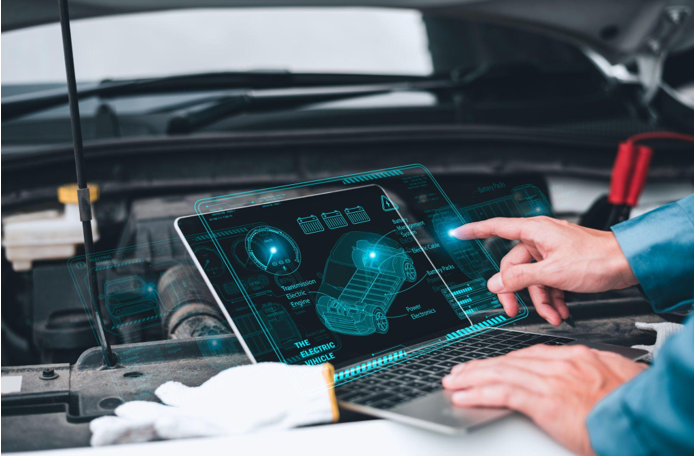
Machine learning is a subset of artificial intelligence in which algorithms "learn" from large amounts of data and use that learning to make accurate inferences about new data. Machine learning plays an important role in the EV industry because modern EVs generate data that computers can use to improve vehicle diagnostics and maintenance. If you're an EV technician, there's a lot you should know about machine learning and how it affects the EV industry.
Key Takeaways
Machine learning is changing the way EV faults are diagnosed and addressed.
Machine learning makes increasingly accurate predictions about EV performance, including battery life and possible distance given the battery charge.
Machine learning can reduce downtime and repair costs by catching problems in their early stages. AI can detect problems ranging from battery degradation to performance issues.
EV technicians need skills in electrical systems, diagnostics, sensors, and data analysis to work with today's EVs.
Online EV technician training prepares future technicians for working on the next generation of EVs.
What Is AI and Machine Learning in EV Diagnostics?
Machine learning is the ability of AI to identify patterns and predict outcomes based on previous patterns. In the case of EVs, machine learning refers to how onboard computers in electric vehicles send vehicle data to AI systems, which then use it to improve EV performance. This data-driven diagnostic is becoming the industry standard because it improves the user experience, helps ensure vehicle safety, and extends vehicle service life.
How AI Detects Battery Problems Earlier
Batteries are the largest contributor to the cost of electric vehicles and are essential to their operation. Typical EVs use lithium-ion batteries because they're lightweight, long-lasting, and energy-dense.
Over time, lithium-ion batteries can degrade to hold less charge and operate less efficiently. One way that this problem is addressed is through charging stations that analyze the state of the battery and predict how far the charge will carry the vehicle. These predictions are used to plan trips, identify battery problems, and give drivers confidence that the car will not run out of energy before the next charge.
Smarter Sensor Diagnostics
Vehicles have battery management systems (BMS) that monitor vehicle sensors to identify faults before failures occur. These sensors detect changes in temperature, voltage, current, and more. This is important for ensuring that vehicle operators are able to identify problems before they become serious, and in some cases, can even improve vehicle safety.
One problem that electric vehicles can experience is called thermal runaway — wherein one cell of the battery fails and heats up quickly, potentially causing other cells to do the same. When thermal runaway occurs, fires or even explosions can be the result.
Modern electric vehicles use their BMS to monitor for the conditions leading up to thermal runaway. Older vehicles have less sophisticated systems for monitoring for this problem, but in today's EVs, the sensors and systems that predict thermal runaway have become more sophisticated, making EVs notably safer.
Predictive Maintenance Is Changing Vehicle Service
Scheduled maintenance is the maintenance recommended for all electric vehicles at specific milestones. Predictive maintenance is maintenance that is recommended based on the actual performance of the EV. Predictive maintenance is recommended by machine-learning systems that use AI to anticipate component failures. Getting predictive maintenance addressed early can reduce unexpected downtime and long-term repair costs.
Better for the Driver and the Technician
AI-assisted fault code analysis makes it easier than ever to identify and prioritize EV maintenance tasks. Today, EV technicians make fewer guesses regarding which repairs to make first, second, and third. They also spend less time guessing about the causes of various faults. Machine learning helps support technicians with repair recommendations and improve repair accuracy by guiding technicians to the correct source of vehicle faults.
Connected Vehicles and Remote Diagnostics
Today's electric vehicles also come with cloud-connected vehicle monitoring systems to perform remote diagnostics. Vehicle owners are alerted when a part needs replacement or service, and technicians can see the same information when the vehicle is taken in for service. With remote diagnostics, technicians are able to avoid invasive diagnostic procedures. This makes repairs more efficient and effective.
Skills EV Technicians Need in the AI Era
EV technicians need many skills to maintain today's EVs. If you're new to the industry, you can learn about EV systems in EV technician training. Reputable EV technician training programs teach students what they need to know about software diagnostic tools, how to read diagnostic data, how sensors and communication networks function, how to maintain an EV battery system, and more.
Technicians require continuous learning as AI and EV technology evolves. EVs are improving all the time, and technicians must keep up their skills to maintain their effectiveness. Often, EV technicians re-connect with polytechnic schools long after graduation to gain additional education and keep up their skills.
Prepare for a Career in Electric Vehicle Technology
Machine learning has improved EV technology in recent years by enabling greater diagnostic accuracy, faster repairs, reduced repair costs, longer battery life, and other benefits. Even as AI is changing how EVs are diagnosed, skilled technicians are still essential for conducting repairs. Now more than ever, technicians are needed to keep the world's growing fleet of EVs on the road.
If you would like to become an EV technician, whether you're just now entering the job market or changing careers from another trade, you'll need knowledge of EV systems, including battery technology, diagnostics, and electronics.
Get your start today with EV Technician Training that allows you to earn a certificate as an EV Technician. Contact George Brown Polytechnic by calling our number at 1-888-553-5333. You can also email us at [email protected].